
I like to cook. I really like to cook. I often tell people with total candor that if I had learned to cook when I was younger (like most teenaged boys, about the best I could do was heat up a can of soup until I went to college), I think I would have tried to make a career out of restaurants.
We have friends and family over for dinner quite often and people know that whenever they arrive, pretty much everything they eat is going to be made from scratch. Doughs, sauces, desserts… everything. Admittedly, not everything always comes out perfect, but I don’t like taking shortcuts when I’m in the kitchen. Would that premade pie shell taste significantly worse than the one I’ve been working on for 4 hours? Perhaps not, but I enjoy the process of building a meal and getting my hands dirty.
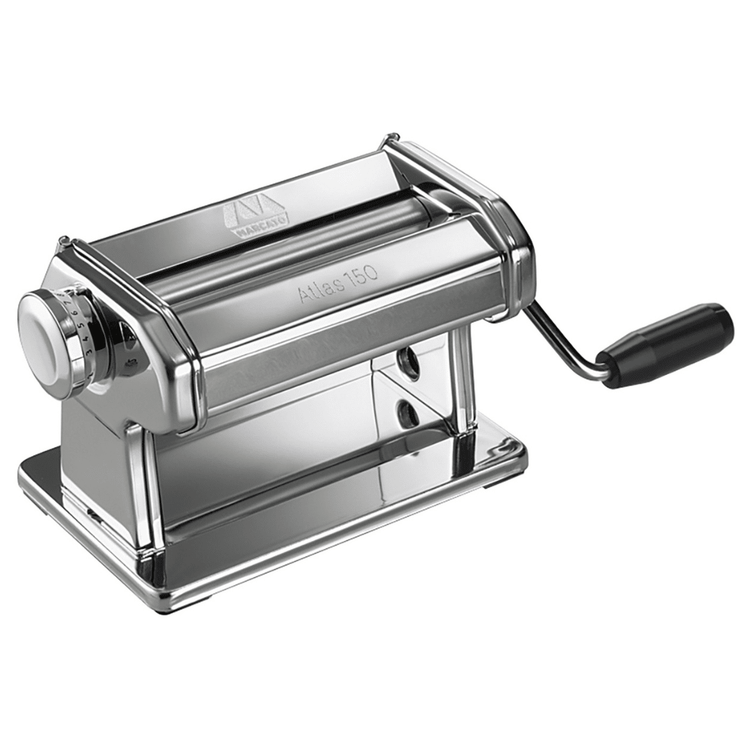 Until recently, there was one minor exception — pasta. In my late 20s, I had bought one of those pasta rollers (it looks exactly like this photo) to make my own noodles and, well, it was a pain. My kitchen was too small, the process was too laborious, and the results kinda sucked. So, for many, many years, the pasta machine stayed tucked away in the basement of our new house, despite its much more functional kitchen and my improving cooking skills. Dried pasta from the store was, well, it was fine. It was a shortcut that I didn’t mind taking because it saved me from a task that I really didn’t enjoy.
Do more of what you like and less of what you don’t
There has been a lot of talk, basically everywhere that you go, about the impact of AI on our world. Certainly, this is a premier topic at basically every CME industry event that takes place these days, and it certainly will be discussed by some of our panels during CMEpalooza Spring (Wednesday, April 29, in case you forgot).
I am not one of those doomsday naysayers who will argue that AI is going to eliminate all of our jobs, nor am I one of those people who refuses to use AI to help me perform professional tasks. I guess I would consider myself somewhere in the middle — I use AI perhaps once or twice a day, but I don’t lean on it to do everything that it probably could to simplify my workload.
Why? It’s simple. I like to use AI to help me with those tasks that I dislike while I don’t like to use it for those professional duties that I enjoy.
For instance, I suppose it is very possible that I could have given one of my usual AI platforms a few ideas of what I wanted to say in this blog post and it would have spit out a very plausible and sensible response that I could have copied and pasted for you here (don’t get any ideas, Warnick). My work would have been done in 2-3 minutes. Instead, I’ve taken considerably more time putting my thoughts together and thinking through what I wanted to tell you. It’s not only because it would be extremely insincere to take such an insidious shortcut, but because I enjoy the mental challenge of writing these posts (well, usually).
I have met with a few CME technology providers over the course of the last few years who specialize in producing AI solutions. The general sales pitch is typically the same — you put us in your grant request and if your proposal gets funded, you turn over the nuts and bolts of developing the educational activity to us. We take care of the content development, the production, and the testing, while you just handle the project management and accreditation piece. For some people, that probably sounds great – very little work to be done. But I like working with new sorts of technologies and being innately involved in the content development process. I will never simply turn over an activity and give up the work that I enjoy most to another entity simply because it’s a handy shortcut.
On the flip side, there are some things I always turn to AI platforms to help me with. I am not terribly visually oriented, so when I have a vague idea of an image I want to create for a slide, for example, I have learned how to guide AI in such a way that it produces what I vaguely have in mind in a much cleaner format than I could have produced in an hour’s worth of time. That’s a big score.
Do more of what you like and less of what you don’t
One more quick story:
I was at my primary care doctor a few weeks ago for my annual physical. I’ve been seeing him for close to 25 years, so I know the usual routine. He comes in, we talk about tennis (we both play in the same circles), and then he sits in front of his computer, asks me questions about my health in the last 12 months, and types in the answers without making much eye contact.
But this year was different. As soon as he came in, he asked if he could record our visit so that AI could transcribe the conversations for his chart notes. Instead of staring at a screen for most of our visit, we spent the entire time sitting eye to eye and chatting. Yes, we still mostly talked about tennis, but he was more engaged and seemed to be in a much better mood than usual.
Near the end of our visit, I asked him how much of a difference the AI transcription service made in his daily routine.
“Oh my God, you wouldn’t believe how much better it has made things,” he told me. “I don’t have to spend hours a day typing up my notes, which I always hated to do. Now, I can focus on being a doctor.”
Do more of what you like and less of what you don’t
(Oh, and I broke out the pasta machine a few weeks ago to start making it from scratch again. It is messy and time consuming, but you really can taste the difference.)

 CMEPALOOZA