The Ship of CMEpaloozeus

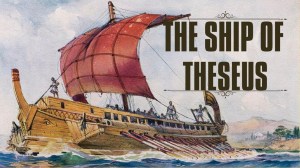
We have had a number of new subscribers to the blog over the past couple of weeks (I’m not sure why. Maybe our billboard advertising campaign is finally paying off?), so I thought this might be a good time to review some of the core tenets of CMEpalooza as a courtesy to those of you who are new to the program or may have simply forgotten. In order to do so, we first need to talk about the Ship of Theseus.

The Ship of Theseus (a.k.a. Theseus’s Paradox) is a thought experiment about, to quote Wikipedia, “whether an object is the same object after having all of its original components replaced over time.” If I have a boat and, over time, I have replaced the rudder, the sail, the deck, the anchor, etc., is it still the same boat? If not, when did it stop being the same boat? (Before I am accused of once again making an obscure reference to something I read in a book recently, I’d like to clarify that my first exposure to the Ship of Theseus was through a podcast called The Rights to Ricky Sanchez which is, of course, a Philadelphia 76ers themed podcast. Apologies to all you Thomas Hobbes podcast fans out there.)

The Ship of Theseus paradox is relevant here because, in order to conduct this thought experiment, we must first break down the object under consideration into its essential components that could theoretically be replaced. What makes the object the object? What makes CMEpalooza CMEpalooza?

There are three core tenets of CMEpalooza:

  1. It should be educational, but fun
  2. It should be easy to access
  3. It should be free

These are the rock-solid pillars of CMEpalooza that have held it up ever since the first palooza in March of 2014. We have other traditional elements that have become synonymous with CMEpalooza, such as:

  • Scott’s biannual sponsor event/game, which will be coming next week
  • The CMEpalooza STEPtacular Challenge (sponsored by Talem Health), which will take place the week of October 13
  • My CMEpalooza Haiku blog post, coming October 15, unless I get a wicked case of writer’s block, which is always a possibility

But you can remove all three of these elements, and CMEpalooza will still be CMEpalooza.

CMEpalooza will always be fun, easy, and free. We have had different faculty, different topics, different formats, and a different platform. but because those three core tenets remain, the Ship of CMEpaloozeus sails on.

The Power of Storytelling in Medical Education (Part 2)

Epic Fail | Lynn Dove's Journey Thoughts

(The headline for this blog post mistakenly was emailed out with a big pile of nothing under it earlier this week — many people have told me it was some of my best work. Mea culpa.)

I got a bit carried away last week tying in Freytag’s pyramid with case-based CME in the blog, so I held over part of what I planned to share for this week. I know, I know, you have been waiting breathlessly with anticipation.

Among the other themes of the recent Alliance Industry Summit (AIS), as with basically every other conference ever developed, was “celebrating our successes.” This is where groups get up and talk about the wildly successful initiative they worked on last year, with innovative educational design frameworks, carefully planned partnerships, and outcomes that shine. Of course, it can inspire ideas of your own when you hear about other successful projects, but as one of the presenters (I think it was during the keynote, but I’m not sure) noted, “Why aren’t we talking about the projects that didn’t do so well? Isn’t there something we can learn from those?” (note from Derek: um…that was me. I said that. Thanks for coming to my session.)

But owning up to, and shining a spotlight on, our professional failures exposes us as something less than complete and utter successes. It can be embarrassing and humiliating to talk about projects that failed to live up to our lofty ambitions, even though we all have many, many of these to address. And so, we tuck these failures away into those little spaces that no one at civilized parties ever talks about, and we pretend they never happened.

Now, I’m not talking about those grand rounds or live webinars where no one (or almost no one) shows up — that happens a lot more than people are willing to admit. Or those recorded sessions where the audio feed cuts out for a minute or two — annoying but not catastrophic. I am talking about those crazy ideas that proved to be, well, crazy. But also, perhaps instructional for our community.

So, since I really don’t care if I am ridiculed or humiliated, I’ll go first (and, sigh, probably last. Wimps. Prove me wrong in the comments here or on our LinkedIn post.).

MY BIGGEST PROFESSIONAL FAILURE

This goes back about 18 or so years ago when I was working for a midsized medical education company. I had read something about the value of small group learning and indeed was coming off of a project where we had a lot of success educating teams of 15-20 learners in the live setting. So, I started noodling around with the concept of bringing small group learning to the satellite symposium — essentially, the antithesis of the small group setting.

Here was my idea: we’d divide up the big ballroom that held 150 learners into three separate rooms with those portable wall dividers you sometimes see in physical meeting spaces. We’d have three different stages and three faculty who would rotate through the rooms on a very specific time schedule (15 minutes in each room, with 5 minutes to move to the next room). All 150 learners would eventually get the same education, but each room would get that education in a different order — our faculty members would present their own content three times. The faculty would be asked to interact and engage with each “small group” of 50 learners, giving the education a more personal feel.

Yes, it was weird, but it was different and unique, which apparently was good enough to attract funding from multiple supporters. Perhaps my written description was just vague enough within our grant request so that the supporters couldn’t see how genuinely unwieldly this program was likely to be. I do distinctly remember one of the funders who told me onsite prior to our symposium, “I don’t understand what you are trying to do even a little bit.” That obviously filled me with confidence.

The physical setup of the room went OK. We had plenty of time to work with the hotel labor team to set up the physical walls between the rooms and equally divide up the tables. Our faculty seemed to understand the general concept — these were all people I had worked with before, so they trusted me (fools!) and didn’t try to question how or why this was going to work.

But then the learners started showing up. They didn’t understand why some people were asked to go into one room while some went into another. It took a long time to get everything situated — too long, of course — which meant we started the symposium 5 minutes late. I had to run between the 3 rooms to get everyone on the same schedule to make sure all of the presentations started more or less simultaneously.

Problem #1 averted (sort of).

Then the presentations start, and it becomes clear that these folding walls weren’t sufficiently muffling the noise between each room. You could clearly hear the presentation in the adjacent room, which not only annoyed attendees but also threw off faculty as well. There was no interaction between anyone. But no time to complain or try to fix anything, because it was time to switch rooms. DING!

Faculty 1 ran from room 1 to room 2, faculty 2 ran from room 2 to room 3, and faculty 3 circled from room 3 to room 1. For this first switch, the timing worked OK, but it was clearly a challenge to get mentally adjusted to the new room and the next presentation. Faculty were frazzled and learners were disjointed. The noise again carried throughout the rooms. Faculty covered maybe 50% of the planned content in this second segment because we were running behind and everything was confusing. Still no “small group” interaction that I had hoped for. But no time to complain or try to fix anything, because it was time to switch rooms. DING!

Faculty 3 ran from room 1 to room 2, faculty 1 ran from room 2 to room 3, and faculty 2 circled from room 3 to room 1. We were now 10 minutes behind, which meant that faculty had 5 minutes to give their final presentation. I was still putting up a good front (I think), but on the inside, I was working on my resume. Just in case.

When the time was finally up and the faculty had collapsed in a heap at the side of their stage, I congratulated them on doing such a great job under fairly trying circumstances. One of them said to me, “Let’s not do that again.” Good idea.

So, what did I learn from this experience (and perhaps what can you learn as well)? First, there is nothing wrong with thinking out of the box and coming up with creative ideas to liven up our education, but there are limits to what we can and should do. Second, be realistic in your educational plans. But most of all, don’t be afraid to fail. That is how we grow professionally. I am not embarrassed or ashamed to tell this story of my biggest failure — I tried my best and really did work with my team to plan for what we hoped was going to be something unique and successful. It was just a dumb idea that should never have gotten off the ground. It happens to all of us.

CMEpalooza Trivia (Play-At-Home Edition)

For all of you unable to make it to CMEpalooza Trivia night at the Alliance Industry Summit last week (sponsored by AcademicCME):

    1. Shame on you
    2. You’re in luck

Below are all 25 questions from Trivia Night with an answer key at the end, so you can play along at home. As a bonus, here is the Spotify playlist we used, with a song for each question. You can play it while answering the questions, and it will almost be like you were there. Almost.

Group #1: AIS Day 1 Trivia

  1. What is Optimal Commercial Supporter Involvement in Outcomes Measurement?
    Derek Dietze, MA, FACEHP, CHCP
    According to recent interviews with commercial supporters, which of the following was reported as being among the reasons why commercial supporters provide outcomes guidance and suggest outcomes templates to providers?

    1. Legal boundaries have been lowered, allowing for more compliant conversations
    2. Organizational mandates to become more involved in data assessment
    3. Aggregation and internal reporting
    4. To make my role appear more valuable to internal stakeholders
  2. CME Coalition Updates
    Andrew Rosenberg, JD, MP
    What is the focus of the Medication Access and Training Expansion (MATE) Act?

    1. Mandate accredited education specifically for nurse practitioners and physician assistants focused on drug safety issues
    2. Incentivize drug manufacturers to invest in CME programs focused on diet and physical activity to reduce medication use in chronic diseases
    3. Develop patient-level education alongside CME-certified education across a broad range of topics
    4. Establish a 1-time CME requirement for prescribers of opioid medications
  3. Best in Class Awards #1
    PVI’s award-winning program focused on the care of Type 2 diabetes centered on three primary learning objectives. Which of the following was NOT among the these LOs?

    1. Prioritizing weight loss
    2. Intensifying treatment based on national guidelines
    3. Applying shared disease making
    4. Serving underserved communities
  4. Best in Class Awards #2
    What was unique about Medscape’s award-winning initiative focused on connected care in hypertrophic cardiomyopathy?

    1. Cardiologists were specifically recruited to the CME-certified education based on their patients’ participation in WebMD education
    2. Patients were specifically recruited to the patient education based on their cardiologists’ participation in the Medscape education
    3. It was able to measure patient-level data tied to four different learning objectives
    4. It showed no improvement in diagnostic testing despite robust education delivered to both patients and healthcare professionals
  5. Pop Culture Trivia
    There are 3 UNESCO World Heritage Sites in Pennsylvania. Which IS NOT included among these?

    1. Monongahela Incline (Pittsburgh)
    2. Fallingwater (Mill Run)
    3. Independence Hall (Philadelphia)
    4. Moravian Village (Bethlehem)

Group #2: AIS Day 2 Trivia

  1. Strategic Thinking Behind Instructional Design (Insight) and Its Goal (Impact on Patient Outcomes)
    Kim Storck, PharmD, RPh, Sarah Atwood, Nimish Mehta, PhD, MBA, CHCP, Margaret Harris
    Using a story or case as the foundation for a continuing education activity is an example of which of the following?

    1. Adaptive learning
    2. Anchored instruction
    3. Backward design
    4. Situated cognition
  2. Getting Unstuck: Looking Beyond Isolated Success Stories to Create Transformative Change
    Vanessa Senatore, Katlyn Cooper, Annette Schwind, MS, CHCP
    What framework is used to facilitate scenario-based learning?

    1. Apply, Analyze, Assess, Accumulate
    2. Challenge, Choices, Consequences, Contemplate
    3. Plan, Prepare, Perform, Prove
    4. Setting, Situations, Selections, Solutions
  3. DETECTing a Thoughtful Risk Taking Approach to T1D Education and Funding
    Derek Warnick, MSPT, FACEHP, Lauren Welch, Tom Bregartner, Shpetim Karandrea
    Which of the following best defines the principle of Thoughtful Risk-Taking (TRT)?

    1. Taking bold risks without hesitation to maximize opportunities, regardless of the consequences
    2. Exercising maximum caution to protect patients, customers, and the company while ensuring organizational stability
    3. Making decisions that maximize opportunities while carefully managing risks within the company’s risk appetite, guided by ethics and integrity
    4. Delegating all risk-related decisions to leadership to ensure risk-based accountability lies only at the top of the organization
  4. From Insight to Impact: C-Suite Payer and Provider Stakeholder Education Exchange Sparked Strategic Collaboration to Transform Retinal Care Delivery
    Terry Richardson, PharmD, BCACP, Steve Casebeer, MBA
    Following the completion of a CMO/CPO Summit focused on the management of retinal disease, one managed care executive took which of the following steps?

    1. Launched a free, in-home retina screening program for Medicare recipients covered within the health plan
    2. Expanded an internal phone bank initiative for patients diagnosed with Type 2 diabetes at risk for the development of retinal disease
    3. Championed the overhaul of internal coverage policies for approved biologic therapies used for four different retinal diseases
    4. Helped create a patient-friendly AI app for covered recipients focused specifically on improving awareness of retinal disease risk factors
  5. Pop Culture Trivia
    What famous dessert was baked commercially for the first time anywhere in Philadelphia in 1933?

    1. Twinkies
    2. Girl Scout Cookies
    3. Little Debbie Swiss Rolls
    4. Tastykake Krimpets

Group #3: AcademicCME Questions

  1. Tim Hayes, Patrick Hayes, and AcademicCME were all born in this town:
    1. Hackensack, NJ
    2. Wayne, PA
    3. Princeton, NJ
    4. Bensalem, PA
  2. Patrick Hayes (and three siblings) attended the College of Charleston in South Carolina. What is the official state nickname for South Carolina?
    1. The Sawgrass State
    2. The Tangerine State
    3. The Palmetto State
    4. The Gamecocks State

  3. Temple University is the alma mater of Tim Hayes (and Hall & Oates). Which bird of prey is the Temple U mascot?
    1. Eagle
    2. Hawk
    3. Falcon
    4. Owl

  4. Which visually impaired musician is a favorite of Tim Hayes (and occasional dining companion)?
    1. Stevie Wonder
    2. Diane Schuur
    3. Andrea Bocelli
    4. Jose Feliciano

  5. AcademicCME is the unofficial Medical Education Company of the Super Bowl champion Philadelphia Eagles. Who was the MVP of the last Super Bowl?
    1. Jalen Hurts
    2. Saquon Barkley
    3. Patrick Mahomes
    4. What’s the Super Bowl?

Group #4: AIS Day 2 Trivia continued

  1. Achieving Insights in Regional Education in Breast Cancer By Incorporating Social Listening with Oncologists
    Alana Brody, MBA, CHCP
    What is the primary benefit of incorporating social listening into a CME activity?

    1. Determine clinician preferred style of learning
    2. Identify clinician insights
    3. Compare objective and subjective outcomes
    4. Engage and influence learners
  2. Map It to Max It: How Geodata Uncovered and Powered Up Our Educational Reach
    Larissa Miller, PhD, RN, NPD-BC, CNE, CNS
    Which data visualization software can best help CE practitioners map their quantitative data?

    1. PowerPoint
    2. Microsoft Teams and Forms
    3. Tableau and Power BI
    4. Power BI and Kahoo
  3. Evolving the Pyramid for Real-World Learning: A Workshop to Re-Imagine the Outcome Framework for Evidence Translation and Modern-Day Clinical Impact
    Caroline Pardo, PhD, CHCP, FACEHP, Vince Loffredo, EdD, William Mencia, MD, FACEHP, CHCP, Amanda Kaczerski, MS, CHCP, FACEHP, Suzette Miller, MBA, CHCP, FACEHP

    In the “Evolving the Pyramid for Real-World Learning” session, the Design Workshop was focused on learners designing a new _______ to reflect CME planning and design for today’s learners.

    1.  Geometry
    2.  Pyramid
    3.  Algebra
    4. Shape
  4. Is it compliant to hold accredited and nonaccredited CME programs in the same room?
    1. Yes, as long as each is properly identified
    2. Yes, as long as each is properly identified and there is a 30-minute gap between them
    3. Yes, as long as each is properly identified and there is a 60-minute gap between them
    4. No
  5. Which of the following TV shows is NOT set in Philadelphia?
    1. Abbott Elementary
    2. Boy Meets World
    3. It’s Always Sunny in Philadelphia
    4. That ‘70s Show

Group #5: CME Wildcard Trivia

  1. Who currently holds the position of Secretary of the Alliance Board of Directors?
    1. Audrie Tornow
    2. Pam Beaton
    3. Michelle Tyner Skidmore
    4. Riaz Baxamusa
  2. According to the 2024 ACCME Annual Report, which provider type has the most accredited organizations?
    1. Publishing/Education Company
    2. School of Medicine/Health Sciences
    3. Professional Membership Organization
    4. Hospital/Healthcare Delivery System
  1. 2026 is the Alliance’s 50th Which city hosted the first Alliance conference back in 1976?
    1. Chicago
    2. Atlanta
    3. Philadelphia
    4. San Francisco
  1. Which of the following companies is a 2025 Gold Sponsor of AIS?
    1. AstraZeneca
    2. Medscape
    3. Bonterra
    4. AcademicCME

  2. Who penned the song lyrics “Well, they blew up the chicken man in Philly last night. Now they blew up his house, too.”
    1. Bruce Springsteen
    2. Bob Dylan
    3. Joan Baez
    4. Questlove

ANSWER KEY

Group 1

  1. c
  2. d
  3. d
  4. a
  5. a

Group 2

  1. b
  2. b
  3. c
  4. a
  5. b

Group 3

  1. b
  2. c
  3. d
  4. c
  5. a

Group 4

  1. b
  2. c
  3. a
  4. b
  5. d

Group 5

  1. c
  2. d
  3. b
  4. c
  5. a